Showing posts with label Science. Show all posts

Saturday, 24 August 2013

Sex and Relationships

Sam Harris' book The Moral Landscape
goes into detail about how science is
better equipped to answer moral and
ethical questions than religion
When Sam Harris and Richard Dawkins argue that science has an answer to ethical and moral questions they were quite right.  There is no doubt that the more we investigate not only social science but also neuroscience, we find a lot of evidence that human behaviour relies on many factors that traditional moral teachers (clerics and philosophers) are not aware of - and the answers from science of course always outweigh any other answer due to its reliance on observation and evidence rather than ideological biases.

Be that as it may, I'm going to argue for two opposing points in this post pertaining to sex and relationships.  The first point are opinions I held for a while reinforced by some research but mainly philosophers and logicians while the second is purely scientific that a recent discussion on Reddit has brought to my attention.  Further investigation into this scientific view that seem to oppose my initial opinions shows it to be quite a large subject in itself that I thought deserves a blog post - especially as I haven't written anything here for a while - to not only share the information, but also help structure and solidify it in my own head.


The Argument

What is sex and how does it relate to relationships?  In its basic form sex is nothing more than an activity carried out with two or more individuals.  Looking at sex from a neutral stand point, there is absolutely nothing else to add to this activity in terms of emotions, responsibilities or consequences.  However the value of sex seems to vary with different people as some will practice it quite liberally with many people, some will only practice it with individuals they feel an emotional connection with, some will only practice it when a certain marriage ritual is carried out and of course some choose to remain celibate and not practice it at all.  Thus it seems the value sex holds is very subjective, it depends on the individual in his or her religious views (a major point to be expanded on later) and in his or her upbringing and opinions as well as social views and practices.  One thing that can definitely be taken from a basic observation that sex and love do not necessarily go hand in hand. 

I like to use a hypothetical scenario to bring the point home.  For the sake of brevity I'm going to assume I'm talking to a male in a heterosexual relationship.  The point however still stands with opposite genders and/or sexual orientations replaced.  Remember, before you think this is absolute nonsense, I'm going to provide the counter argument afterwards which I only recently learned.

The scenario requires an assumption that you know as an indisputable fact that your partner is straight and will not commit to a relationship with someone of the same gender (remember the assumption is that I'm talking to a male in a heterosexual relationship simply for brevity - the argument still applies with genders/sexualities reverses).  Now what if you come home one day and you find your wife sleeping with another woman (homosexual flings amongst the straight community happen quite often and do not necessarily entail committed relationships).  How would your emotional state at this moment compare if it was another man your wife was cheating on you with?  The common response is that the feeling of distress and jealousy will be larger where your wife cheated on you with another man rather than a woman as this research argues.  The reason behind this is the man poses a greater threat to your relationship than a woman would, and in addition to that, evolutionary speaking, the opposite sex will further pose a reproductive threat.  So it's not so much the act of sex that causes emotional distress, since sex occurred in both instances whether another woman or another man was involved - but rather it's the competition and the threat of you being replaced within the relationship which truly causes the distress.

Bertrand Russell
This opinion is further enforced by Bertrand Russell in his book Marriage and Morals (1929) where the first few chapters describe the differences between a patriarchal society and a matriarchal one.  Before I go into that however, I should just briefly introduce the gene centred view of evolution where the driving force of reproduction is considered to be passing on your genes.  Richard Dawkins wrote an excellent book on the subject aptly named The Selfish Gene (1976) where he shows within different species the objective of passing on your genes are a priority in life and your body is merely a tool for those genes to survive different generations.  And this broadly relates to what Bertrand Russell views the very reason a patriarchal society and marriage itself has developed.  Evolutionary, men within societies common in the world today, have an intrinsic need to pass on, not only their genes, but their belongings, wealth and way of life in an attempt to possibly survive death (in a metaphysical sense I suppose).  This desire amongst men would obviously require procreation and obviously the tool towards that is women.  But how would a man ensure that the children of the woman they chose to procreate with are truly theirs?  That those children truly have his genes?  According to Bertrand Russell, it's marriage.  Marriage (monogamous or polygamous - as long as only one male is in the picture - the number of women is irrelevant in the patriarchal society) ensures that the children bred by a female will only carry the male's genes and thus his property, wealth and culture following the individual male's death.

Marriage is further attacked as a patriarchal and oppressive institution by George Bernard Shaw who said:

The stupidity is only apparent: the service was really only an honest attempt to make the best of a commercial contract of property and slavery by subjecting it to some religious restraint and elevating it by some touch of poetry. But the actual result is that when two people are under the influence of the most violent, most insane, most delusive, and most transient of passions, they are required to swear that they will remain in that excited, abnormal, and exhausting condition continuously until death do them part. And though of course nobody expects them to do anything so impossible and so unwholesome, yet the law that regulates their relations, and the public opinion that regulates that law, is actually founded on the assumption that the marriage vow is not only feasible but beautiful and holy, and that if they are false to it, they deserve no sympathy and no relief.
What Shaw argues is not necessarily an abandonment of monogamy, but rather the view that people marry for life (or until death do them part) is illogical.  He rather espouses a serial monogamy since you cannot possibly reason that it's possible to find one person and love that person for the rest of your life just as you have the day you decided to get married.  There will always be someone else you will meet that you might relate to more than the person you have decided to chain yourself to.  Thus the very institution is viewed as not only oppressive, but also unnatural.

As for the matriarchal (or rather matrilineal) society that Bertrand Russell spoke of, he describes the inhabitants of Melanesia and in particular the Trobriand Islanders.  A common belief amongst these communities is that pregnancy occurs through spirits entering the female body.  Sex and the role of men in a relationship has been completely divorced from pregnancy and procreation and thus a father in the sense people in the modern world view is absent.  Children are raised by the community, men are less competitive and there is no jealousy when women have sex with men other than their partners.  This clearly shows the emotional distress that men in the modern world feels when his partner 'cheats' on him is something that is not intrinsic to our nature as humans, but rather programmed within our minds.

The Counter Argument

There are many arguments in support of a life long monogamous relationship, but I found two arguments only deserves serious consideration, the welfare of children and the neural processes and hormones released by the brain when in a relationship and especially during sex.  

As for children, there are opposing researches on both sides of the spectrum.  According to one research, children raised in a traditional nuclear family do much better than those in a blended family (step-parents) or single-parents.  However, another research shows that children raised by communities with several adult supervisors rather than a nuclear family tend to be more emotionally stable and caring.  Whatever the best lifestyle raising children is, in terms of relationships, children aren't a necessary product.  With modern day contraceptions during and after sex as well as the safety of abortions, having children is now a choice that a couple can plan for if they really want one and wont be forced on them in normal circumstances.  

The neurological changes, however, is where this argument gets interesting.  Vasopressin is a hormone that plays an important role in social behaviour in particular amongst monogamous species.  To quote from the Wikipedia link:

There are consistent differences between monogamous species and promiscuous species in the distribution of AVP receptors, and sometimes in the distribution of vasopressin-containing axons, even when closely related species are compared. Moreover, studies involving either injecting AVP agonists into the brain or blocking the actions of AVP support the hypothesis that vasopressin is involved in aggression toward other males. There is also evidence that differences in the AVP receptor gene between individual members of a species might be predictive of differences in social behavior. One study has suggested that genetic variation in male humans affects pair-bonding behavior. The brain of males uses vasopressin as a reward for forming lasting bonds with a mate, and men with one or two of the genetic alleles are more likely to experience marital discord. The partners of the men with two of the alleles affecting vasopressin reception state disappointing levels of satisfaction, affection, and cohesion. Vasopressin receptors distributed along the reward circuit pathway, to be specific in the ventral pallidum, are activated when AVP is released during social interactions such as mating, in monogamous prairie voles. The activation of the reward circuitry reinforces this behavior, leading to conditioned partner preference, and thereby initiates the formation of a pair bond.

So Vasopressin is responsible for the feeling of jealousy and aggression towards other males.  It is also responsible for feeling a reward when forming a bond with a mate.  So this hormone is clearly a way our body tries to instil  a monogamous relationship within our social lives.

The second chemical is also a hormone that is fairly known; Oxytocin.  The following video from TED gives a very engaging introduction to Oxytocin and how it effects our mentality.


So briefly, Oxytocin creates a feeling of love and emotional attachement to a fellow human being.  I'd like to add that Oxytocin is released by the brain at certain events, one of which is at sexual orgasms in both men and women.  I suppose that puts into question an earlier statement I made in this post that sex and love don't necessarily go hand in hand.  Furthermore, similar to Vasopressin, Oxytocin was also found to be responsible for feelings of jealousy and aggression around individuals seen as a threat to a relationship.

So there you have it.  Two hormones our body releases that seem to favour a monogamous relationship.  Is it only an evolutionary conclusion forced on our neural biology due to a long history of monogamous relationships?  The philosophy behind open relationships, or at least, serial monogamy still holds logical sense, but the bio-chemistry of our make-up suggests otherwise.  In the end we're constantly learning about ourselves and who knows what will neuroscience discover in the future.  More importantly though, we are constantly evolving and I imagine our logical thoughts will help us change our environment to that we see better for the specie and thus carve out our evolutionary path.  It's an interesting subject either whatever opinion you hold.

Tuesday, 6 December 2011

Travelling to Pluto?

A few months ago I came across Audible.com.  Audible is a company owned by Amazon which specializes in selling audio books (and pretty great quality I must add).  So I subscribed to get one audio book every month and after research I settled on getting Bill Bryson's A Short History of Nearly Everything.  An absolutely wonderful book which I heartily recommend, but there is one section that I keep returning to again and again as it fascinated me to no end.  I decided I should share that brief section with everyone and so played the audio book and typed down what was being said as accurate as need be.  The book starts by talking about the universe and how it started (where you're writing about the history of 'everything', how the universe began would be the best place to start I guess) and Bill begins showing how immense our universe is by just showing us our own solar system.  A small picture in the grand scale of things, but effective in it being a small picture.

Our solar system is so vast that even the maps we look at in books are not even remotely to scale.  This is a necessary deceit to get all the planets on the same piece of paper.  For example, Neptune is five times away from Jupiter than Jupiter is from us.  Such is the distances that it isn't possible or practical to draw out the solar system to scale.  On a diagram of the Earth drawn to scale with the Earth at the size of a pea, Jupiter will be over 300m away, and Pluto 2.5km distant and about the size of a bacterium.  On the same scale, Proxima Centauri, our nearest star will be 16,000 km away!  Even if you shrank down everything so that Jupiter will be the size of a full stop at the end of a sentence and Pluto was no bigger than a molecule, pluto will  still be more than 10m away!


Our solar system surrounded by the Oort Cloud.

If we rode a spaceship that can travel at the speed of light (which is not possible) (300,000 km/s) it will take us 7 hours to get to Pluto from Earth.  Currently at the speed of a normal space ship (56,000 km/h) it will take 9 years to reach Uranus and a dozen years to cross the orbit of Pluto.  By the time we get to Pluto the Sun is as small as a pin head.  At this point, the Oort Cloud, at the edge of our solar system, is 10,000 years away from us.  Where Pluto is about 40 AU from the Earth, the heart of the ort cloud is about 50,000 AU.  In other words, it is remote.  Based on what we know now and can reasonably imagine, there is absolutely no prospect that any human being will visit the edge of the solar system.  Ever.  It is just too far.  And remember, we're talking only about our own solar system, our Milky Way galaxy contains billions of solar systems and there are hundreds of billions of galaxies in the universe.

Sunday, 30 October 2011

The Immortal Jellyfish (yay! I'm back!)

Well now that I finished a major part of my dissertation, I feel I have more time to return to blogging! So here we are again!


Today someone on reddit mentioned something quite interesting about life in the depth of the ocean which lead to alot of reading on the net.  The following are three amazing creatures of the oceans and seas that I want to share.

First, the immortal jellyfish (pictured) that can practically return to its youth after sexual maturity and repeat its biological life-cycle indefinitely!  They would actually carry out the transformation in times of hardship and physical damage so that in a sense they would get another chance at things!

Another sea creature worth mentioning amongst the immortals is the lobster.  Apparently their DNA contains a gene that will repair deteriorating cells and thus technically, they never age but still continue to grow in size!  The article on the lobster end with a brief mention of something known as the Hayflick limit stating that due to this limit we cannot introduce immortality to humanity as it will only lead to cancerous cells.  I did a brief research on what the Hayflick limit is and my understanding is that it is a limit to the number of times a human cell can divide (through mitosis) to continue the growing process.  Research discovered three stages to a cell's life;
Hayflick found that cells go through three phases. The first is rapid, healthy cell division. In the second phase, mitosis slows. In the third stage, senescence, cells stop dividing entirely. They remain alive for a time after they stop dividing, but sometime after cellular division ends, cells do a particularly disturbing thing: Essentially, they commit suicide. Once a cell reaches the end of its life span, it undergoes a programmed cellular death called apoptosis.

The last mention to the fantastic world beneath the seas and oceans goes to the octopus and their amazing brains.  Not only are their brains larger relative to their size than any other animal except for birds and mammals, but they also have areas of their brain completely dedicated to memory and learning.  Furthermore, like humans, they have a preference as to whether they're left or right oriented in the sense that there is preference for the use of the right or the left eye.  According to the article on Discover;

Such lateralization, corresponding to our right- and left-handedness, suggests specialization in the brain's hemispheres, which is believed to improve its efficiency and which was first considered an exclusively human, then an exclusively vertebrate, attribute.
It is also worth mentioning that like dolphins and dogs, Octopuses enjoy playing and they each have different personalities and characters and thus react differently to different situations.  The Youtube video linked to earlier further mentions their ability to detect light from their body rather than their colour blind eyes which just imagining how that would appear is absolutely mind blowing!


Thursday, 9 June 2011

Scientists create an artificial brain with 12 seconds memory


Scientists at the University of Pittsburgh developed an artificial brain that can sustain 12 seconds of memory. The brain was formed on silicon discs coated with proteins and later on infused with rat brain cells. The brain cells were taken from the Hippocampus section of the brain which Wikipedia tells us is the component of a mammal's brain that plays an important role in short-term and long-term memory.

The cells were then given time to grow, connect and develop a neural network. This network was then given a short electric shock which in natural circumstances would only last a quarter of a second but instead lasted in the network for 12 whole seconds!

Read the article here.

Click here for the full research paper.

Sunday, 5 June 2011

Schizophrenia

Continuing with our psychology theme today (I don't plan these things - they just happen :-P), I've stumbled upon this very informative comic about schizophrenia.

Culture and free will

In the May/June issue of the Scientific American: Mind magazine there is a brief article about Toxoplasma gondii, a certain single-celled organism that reproduces inside cats but can spread to all warm-blooded animals. This protozoa (a quick Google search says that a protozoa is a single-celled organism but is NOT a bacteria) when not inside a feline's intestine reproducing and raising a happy family will endeavor to effect its host's actions so as to give the protozoa access into a cat. How does it do that? Well according to the article it is able to manipulate the host's brain. In the example of small animals like a mouse, the protozoa can create a complete lose of fear of cats in the mouse's brain and thus result in a higher probability that the mouse will be eaten by a cat allowing the protozoa to enter the cat's body. The article doesn't go into much detail on how it can effect humans but goes on about how it effects smaller animals that can be prey to felines.

I did find another article online however, that does give more information about this particular parasite in a human context. Apparently it does create minor character changes in humans, but nothing fatal to the average person. According to the article from Discover, research suggests the following character changes in people infected by T. gondii.

Carriers tend to show long-term personality changes that are small but statistically significant. Women tend to be more intelligent, affectionate, social and more likely to stick to rules. Men on the other hand tend to be less intelligent, but are more loyal, frugal and mild-tempered. The one trait that carriers of both genders share is a higher level of neuroticism – they are more prone to guilt, self-doubt and insecurity.

A second article, also from Discover (although two years older than the previous article), quotes a different research says the following effect T. gondii has on humans.

Those infected, he found, show a small, but statistically significant, tendency to be more self-reproaching and insecure. Paradoxically, infected women, on average, tend to be more outgoing and warmhearted than controls, while infected men tend to be more jealous and suspicious.

It might seem that such character traits are very minuscule and not worth alot of research time and effort but the first article goes on to say that in certain parts of the world, there is a huge portion of the population infected (67% in Brazil). This would raise a very important question on the meaning of how we look at cultures and people's characters. T. gondii has a prefered climate where it does spread in vast numbers. A small character change to the human population in such a region would certainly have an effect on national character traits and the historic cultural evolution of the region.

Nonetheless, the results are striking and one implicaiton is that climate could have a larger effect on culture than previously thought. Toxoplasma gondii‘s eggs live longer in humid, low regions so variations in climate could influence the global distribution of cultural traits. Perhaps, this could explain why men and women perform more distinct roles in society in countries in warmer climates. Other factors can also affect the risk of infection, including cat ownership and national cuisines that include undercooked meat.

We like to think of culture as something governed by the collective actions of free-thinking and free-acting humans. But Lafferty’s analysis shows us that if environmental factors like parasites can affect our thoughts and actions, no matter how subtly, they can have a strong effect on national cultures. In many cases, these effects could be much stronger than the agents that we normally believe to drive cultural trends. After all, more people around the world are infected with Toxoplasma than are connected to the internet.

On a further note in relation to human judgment (but not so much the involvement of external parasites), this old story seems very relevant.  A sex offender in 2002 turned out to have a brain tumor that has been responsible for his perverted habits.  Apparently after the tumor was removed he returned to his usual self until around a year later when the tumor returned and he restarted his habit of collecting pornography and harassing women!

Really, what all this tells us is that the brain is such a complex organ and it should never be very easy for us to make hasty judgments on anyone - even though I'm very guilty of it myself.

Thursday, 26 May 2011

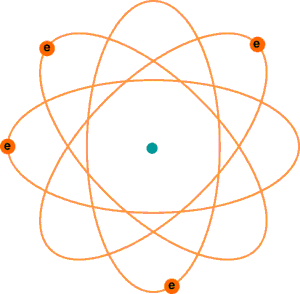
Electrons are surprisingly round

The experiment, which spanned more than a decade, suggests that the electron differs from being perfectly round by less than 0.000000000000000000000000001 cm. This means that if the electron was magnified to the size of the solar system, it would still appear spherical to within the width of a human hair.

The physicists from Imperial's Centre for Cold Matter studied the electrons inside molecules called Ytterbium Fluoride. Using a very precise laser, they made careful measurements of the motion of these electrons. If the electrons were not perfectly round then, like an unbalanced spinning-top, their motion would exhibit a distinctive wobble, distorting the overall shape of the molecule. The researchers saw no sign of such a wobble.


According to the article, the purpose of this recent research is to understand anti-matter which was theorized by scientists to have been created in the same quantity as normal matter after the Big Bang but for some reason is only found in very tiny traces. If the electrons were found to be not as round as expected then scientists hoped that that would explain the lack of anti-matter in the visible solar system.

In another article (posted in 2008) that gives a better background on the relationship between electrons and anti-matter, it explains that "electrons encountering positrons (their antimatter equivalent) annihilate each other, with their mass converted into high energy gamma rays." Furthermore, the largest collection of anti-matter is a cloud near the galactic center.

Now what I'm not understanding is; in a universe made up primarily of matter, how can even the smallest cloud of anti-matter exist? Surely it's gradually being destroyed by border contact with the surrounding matter which exists in greater number? Unless there is a vacuum border between the two that stops contact? And if it existed in equal quantities after the Big Bang (as being theorized), why are the resultant quantities today of the two matters so different?

Wednesday, 18 May 2011

Chickens and Eggs

Today I've learned a new thing about eggs and their colours that I'd like to share here. Obviously we're all familiar with the brown and white eggs in the supermarkets. My parents once told me that the brown eggs are from free range chicken while the white eggs are from chicken fed and raised in cages.

There is an element of truth in that, but the idea behind it is false. It is true that caged hens and mass egg producing industries generally ship the white colour eggs, but that has nothing to do with feeding and environment, but with the type of chicken being used. There isn't only one single type of chickens but a variety of sub-species. The ones producing the white eggs are known as Leghorn and they require less feed to produce eggs (thus more economical, thus more favored by commercial producers). The brown eggs (from Barred Rocks hens) require more feeding and the hens don't produce as many eggs as the Leghorn thus are usually available in less commercialized stores or viewed as the organic or free range alternative.

Now comes the surprise - there are yet more variety of hens that produce even more colours! Greenish-blue eggs and chocolate brown eggs. The Araucanas hens produce a very lovely greenish eggs and if you cross breed you would get an even larger range of naturally colour eggs!

I have no idea if there is any difference in taste, but it really makes me want to have my own farm one day and raise all the different kind of hens there are!

Thursday, 5 May 2011

A space-time vortex right underneath Earth

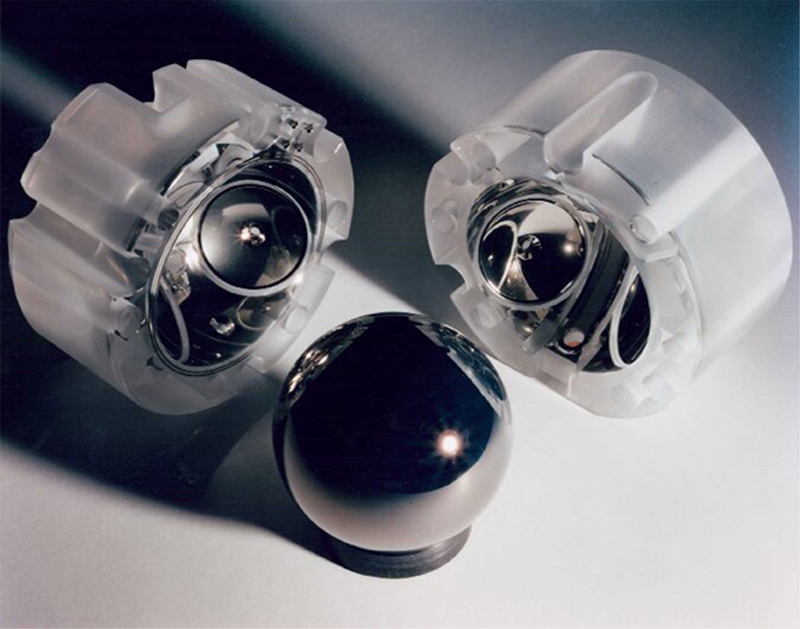
...And every other rotating mass in space apparently.  According to a recent NASA experiment (which required building "the most perfect spheres ever made by humans"), Einstein's predictions that under all spinning objects of a large mass, space-time gets twisted (imagine a fat man in a trampoline rotating in his place) by the motion.  This constant twisting creates a space-time vortex!


For this experiment and the extreme precision it required, NASA had to invent 13 new technologies to succeed and began funding this research since 1963!

Monday, 2 May 2011

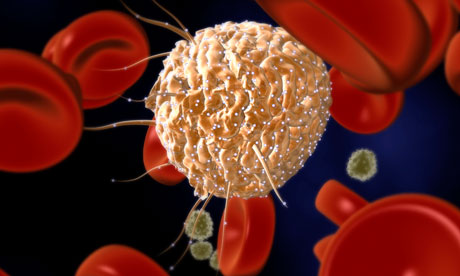
Stem cell treatments threatened by European patents ruling


Stem cell treatments threatened by European patents ruling | Science | guardian.co.uk

What the hell? I used to like Green Peace! In America this research is blocked by conservative Christians and in Europe by environmentalists?